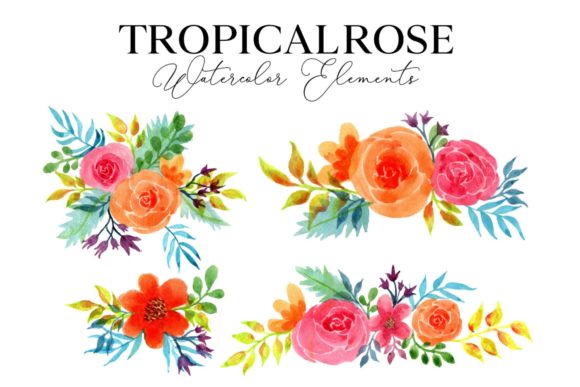
Tropical Rose Floral Element: Elevating Watercolor Projects with Precision and Purpose
The Tropical Rose Floral Element is more than just a decorative graphic; it is a versatile watercolor design asset that bridges the gap between organic artistry and professional digital layout. For creators ranging from wedding stationers to small business owners, this specific style offers a lush, romantic aesthetic that feels hand-painted yet remains crisp enough for commercial reproduction. However, the beauty of a watercolor asset lies entirely in how it is handled. A stunning illustration can quickly look amateurish or pixelated if technical specifications are ignored during the selection and application process.
Understanding the nuances of this design element ensures your final product retains the delicate texture and vibrant color grading intended by the artist. Whether you are designing a blog header, packaging, or social media content, approaching this asset with technical mindfulness will save you time and protect the integrity of your creative vision.
Common Misunderstandings About File Formats and Scalability
One of the most frequent errors creators make when acquiring a Tropical Rose Floral Element is assuming all downloadable files serve the same purpose. Many users see a preview image they love and immediately download the first available format, often a standard JPEG or PNG, without checking for vector compatibility. While raster images are fine for web use, they fail catastrophically when scaled up for print materials like banners, posters, or large-format packaging.
This oversight leads to blurry edges and lost watercolor texture details. When a raster file is stretched beyond its native resolution, the software interpolates pixels, creating an artificial smoothness that destroys the authentic brushstroke effect. To avoid this, always prioritize assets that include an EPS Happy design file or similar vector-based formats. EPS files allow you to resize the floral element infinitely without degradation. Even though watercolor is inherently raster-based in origin, high-quality vendors often provide vectorized outlines or ultra-high-resolution masters specifically to accommodate professional scaling needs.
Verifying Resolution Before Purchase
Before adding any floral asset to your cart or library, verify the DPI (dots per inch). For professional printing, 300 DPI at the intended print size is non-negotiable. A common pitfall is seeing "300 DPI" listed in the description but failing to check the physical dimensions. A 300 DPI image that is only two inches wide is useless for a full-page flyer. Always calculate the effective resolution based on your specific project dimensions to ensure the Tropical Rose Floral Element maintains its crisp, painterly quality.
Navigating Color Profiles and Print Consistency
Watercolor designs are celebrated for their subtle gradients and translucent layers, but these characteristics are notoriously difficult to reproduce across different mediums. A significant mistake occurs when designers use RGB-colored floral elements for CMYK print projects without proper conversion or proofing. Screens emit light, making colors appear more saturated and luminous than ink on paper ever could. Applying a vibrant, screen-optimized tropical rose directly to a matte business card often results in muddy, desaturated output that lacks the original design's vitality.
To mitigate this, perform a soft proof in your design software before sending files to production. If the Tropical Rose Floral Element was created in RGB, adjust the saturation and contrast specifically for the CMYK color space rather than relying on automatic conversion. Additionally, consider the paper stock. Uncoated papers absorb ink, spreading the watercolor effect and darkening the image, while coated papers keep colors vibrant but may flatten the perceived texture. Requesting a physical proof or using a calibrated monitor helps align expectations with reality.
Integrating Quotes and Typography Without Visual Conflict
The prompt suggests that good quotes make the project more beautiful, and this is true, but only if the typography respects the floral element. A prevalent design failure involves placing text directly over complex watercolor areas where the background value varies significantly. This reduces legibility and creates visual noise. The intricate petals and leaves of a tropical rose can compete with script fonts or thin serifs, making the message difficult to read.
Better Approach: Treat the floral element as a framing device rather than a background texture. Position the Tropical Rose Floral Element in corners or along edges to create negative space specifically reserved for typography. If you must overlay text, place a subtle, semi-transparent solid shape behind the quote to unify the background value. Alternatively, choose typefaces with sufficient weight and tracking to stand out against organic textures. Remember that the watercolor design should support the message, not obscure it. Balance is key; let the art breathe alongside the words.
Evaluating Licensing for Commercial and Client Work
For entrepreneurs, freelancers, and marketers, licensing is a critical operational detail often overlooked in favor of aesthetics. Assuming that purchasing a Tropical Rose Floral Element grants unlimited usage rights is a dangerous misconception. Licenses vary wildly between personal use, limited commercial reproduction, and extended commercial rights. Using a personally licensed asset on merchandise for sale or in a client’s branding package can lead to legal issues and reputational damage.
- Check Reproduction Limits: Some licenses cap the number of units you can sell (e.g., 500 prints) before requiring an upgrade.
- Verify Modification Rights: Ensure you are allowed to recolor, crop, or combine the element with other graphics if your project requires customization.
- Client Transferability: If you are a designer, confirm whether the license transfers to the end client or if they need to purchase their own.
Reading the terms of service takes only a few minutes but prevents costly misunderstandings later. When in doubt, contact the creator or platform support for clarification. Professionalism includes respecting intellectual property as much as delivering beautiful design.
Assessing Style Cohesion in Multi-Element Projects
Finally, avoid the mistake of mixing incompatible artistic styles. A Tropical Rose Floral Element rendered in loose, wet-on-wet watercolor technique will clash visually with rigid, line-art botanicals or hyper-realistic digital paintings. Inconsistency in brushwork, color palette, and lighting direction makes a project look disjointed, as if assembled from random parts rather than designed as a cohesive whole.
When building a collection or suite of designs, evaluate the stroke width, edge softness, and color temperature of each asset. The included EPS Happy design should share the same artistic DNA as your other elements. If you are combining assets from different sources, use adjustment layers to harmonize color balance and apply consistent texture overlays to unify the composition. Taking this extra step ensures your final project feels intentional and professionally curated, maximizing the impact of both the floral art and the accompanying message.