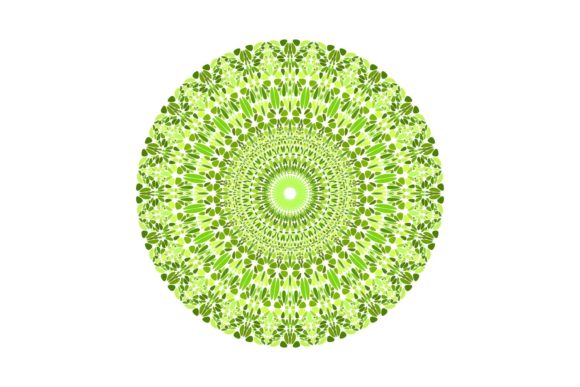
Understanding Green Floral Ornate Mandala and Gemstone Vector Designs: A Complete Guide
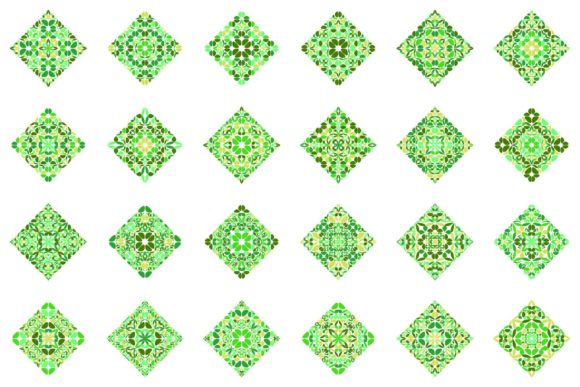
In the expansive world of digital design, few elements bridge the gap between traditional artistry and modern utility as effectively as the mandala. Specifically, the Green Floral Ornate Mandala combined with abstract circular round geometrical colorful gemstone patterns represents a unique intersection of nature-inspired aesthetics and precise mathematical symmetry. For designers, educators, and business owners alike, understanding these ornamental vector design elements is essential for creating visuals that are not only beautiful but also technically versatile.
Whether you are looking to download a high-resolution JPG 5000x5000 file for immediate use or seeking a scalable vector EPS or AI file for professional printing, grasping the nuances of this specific design style will elevate your creative projects. This guide explores the significance, technical specifications, and practical applications of these intricate designs from the ground up.
The Anatomy of an Ornate Floral Mandala
To fully appreciate this design element, one must first understand what distinguishes an "ornate" mandala from simpler geometric variations. The term mandala originates from Sanskrit, meaning "circle," and has been used for centuries in spiritual practices to represent the universe. However, in contemporary graphic design, it has evolved into a powerful decorative motif.
The Significance of Green and Floral Motifs
Color psychology plays a pivotal role in why green floral mandalas are so prevalent in modern design. Green is universally associated with growth, harmony, freshness, and safety. When applied to a mandala structure, which inherently suggests balance and unity, the color green amplifies feelings of tranquility and restoration.
- Biophilic Design: Incorporating floral elements satisfies the human innate tendency to seek connections with nature. In an increasingly digital environment, organic shapes provide visual relief.
- Cultural Resonance: Floral patterns have deep roots in Art Nouveau, Persian rugs, and Indian textiles, making them culturally rich and aesthetically timeless.
- Visual Hierarchy: The intricate petals and leaves create natural focal points, guiding the viewer’s eye toward the center of the composition.
Integrating Abstract Gemstone Geometry
What sets this specific variation apart is the inclusion of abstract circular round geometrical colorful gemstone patterns. While the floral aspects provide organic softness, the gemstone geometry introduces structure and brilliance. These abstract elements often mimic the faceting of precious stones like emeralds, rubies, or sapphires, rendered in a stylized, non-literal manner.
This juxtaposition creates a dynamic tension between the natural (floral) and the constructed (geometric). It transforms the mandala from a purely botanical illustration into a sophisticated ornamental vector design element suitable for luxury branding, high-end packaging, and contemporary digital art.
Technical Specifications: Raster vs. Vector Formats
A common misunderstanding among beginners is assuming that all digital images function the same way. When sourcing a Green Floral Ornate Mandala, distinguishing between raster and vector formats is critical for project success.
JPG 5000x5000: High-Resolution Raster
A JPG file at 5000x5000 pixels is a massive raster image. Raster images are composed of a fixed grid of colored pixels. At this resolution, the file is suitable for large-format printing, such as posters or wall art, provided the viewing distance is appropriate.
Best Uses for High-Res JPGs:
- Digital backgrounds for websites or social media headers.
- Print-on-demand products where vector editing is not required.
- Quick mockups and presentations.
Limitation: If you zoom in beyond 100% or stretch the image beyond its native dimensions, it will pixelate. You cannot easily change individual colors or separate layers in a flattened JPG.
Vector EPS and AI: Infinite Scalability
For professional designers, the vector EPS and vector AI files are the gold standard. Unlike rasters, vectors are defined by mathematical equations (paths, points, and curves). This means they can be scaled to the size of a billboard or shrunk to the size of a business card without losing a single ounce of clarity.
Advantages of Vector Formats:
- Editability: You can recolor the green florals to blue, adjust the opacity of the gemstone patterns, or remove specific elements entirely using Adobe Illustrator or similar software.
- File Size Efficiency: Despite containing complex ornate details, vector files are often significantly smaller in data size than a 5000px JPG because they store math rather than millions of pixel color values.
- Production Ready: Essential for screen printing, laser cutting, embroidery digitizing, and vinyl plotting.
Practical Applications in Modern Life and Business
Understanding the asset is only half the battle; knowing how to apply it effectively determines its value. The Green Floral Ornate Mandala with gemstone accents is remarkably versatile across various sectors.
Branding and Packaging Design
In the wellness, beauty, and organic food industries, trust and quality are paramount. An ornate mandala serves as a seal of authenticity. The complexity of the design implies craftsmanship and attention to detail. When used on packaging, the colorful gemstone patterns can act as a premium accent, suggesting that the product inside is valuable or luxurious. Because vectors allow for spot color separation, these designs can be easily adapted for foil stamping or embossing, adding tactile value to physical products.
Educational and Therapeutic Tools
Mandalas are staples in education and therapy. For children, coloring pages featuring green floral mandalas help develop fine motor skills and focus. In therapeutic settings, the repetitive, symmetrical nature of the pattern aids in mindfulness and stress reduction. Having access to a clean vector AI file allows educators and therapists to customize line weights or simplify patterns for different age groups and cognitive abilities, ensuring the tool is accessible to everyone.
Textile and Surface Pattern Design
Fashion and interior design rely heavily on seamless repeats. A standalone ornamental vector design element can be tiled to create fabric prints, wallpaper, or wrapping paper. The combination of green florals and abstract geometry works exceptionally well in bohemian, eclectic, and maximalist interior styles. Designers can manipulate the vector nodes to create interlocking variations, ensuring the pattern flows seamlessly across yards of material.
Common Misunderstandings and Best Practices
Even experienced creatives can stumble when working with complex ornamental assets. Clarifying these points ensures better outcomes.
Misconception: "Higher Resolution Always Means Better"
While a 5000x5000 JPG is impressive, it is not always superior to a vector. If your workflow involves resizing, recoloring, or compositing, the vector AI/EPS is objectively better regardless of the JPG's pixel count. Reserve high-res rasters for final output stages where vector rendering is impossible.
Misconception: "Ornate Means Cluttered"
A well-designed ornate mandala possesses internal whitespace. Beginners often fear negative space, filling every inch with detail. However, the most effective Green Floral Ornate Mandalas use breathing room to let the colorful gemstone patterns pop. When using these assets, resist the urge to overlay text directly on the busiest parts of the design. Instead, utilize the central circle or outer rim as designated safe zones for typography.
Best Practice: Check Color Modes
Vectors downloaded from stock sites are often in RGB (screen) mode. If you intend to print your green floral mandala professionally, convert the file to CMYK immediately. Neon greens and bright digital gemstone colors often fall outside the printable gamut. Converting early allows you to adjust colors manually before going to press, avoiding dull or muddy results.
Building a Broader Understanding of Ornamental Vectors
The Green Floral Ornate Mandala is more than just a pretty picture; it is a case study in functional art. It demonstrates how ancient symbolic forms can be reimagined through modern technology to serve practical purposes. By understanding the distinction between raster and vector workflows, the psychological impact of color and form, and the specific industry applications, you move beyond being a passive consumer of clip art to becoming an intentional designer.
Whether you are creating a meditation app interface, designing a label for organic tea, or teaching geometry through art, this ornamental vector design element offers a foundation of beauty and precision. Embracing both the artistic heritage and the technical requirements of these files ensures that your work remains relevant, professional, and visually compelling in an ever-evolving digital landscape.